Recommended order:
- Place MaaS tourism topics on the six-category table
- Decide which row fits secondary transport and transit bundle tickets
- Check what integrates easily with regional OTAs such as tripla and existing MaaS
- Put needs review patterns that split booking and usage on equal footing with other models in the quote table
- Narrow to two or three models with the decision checklist, then request quotes
Sections below follow this order.
MaaS and tourism tickets | Map to six categories
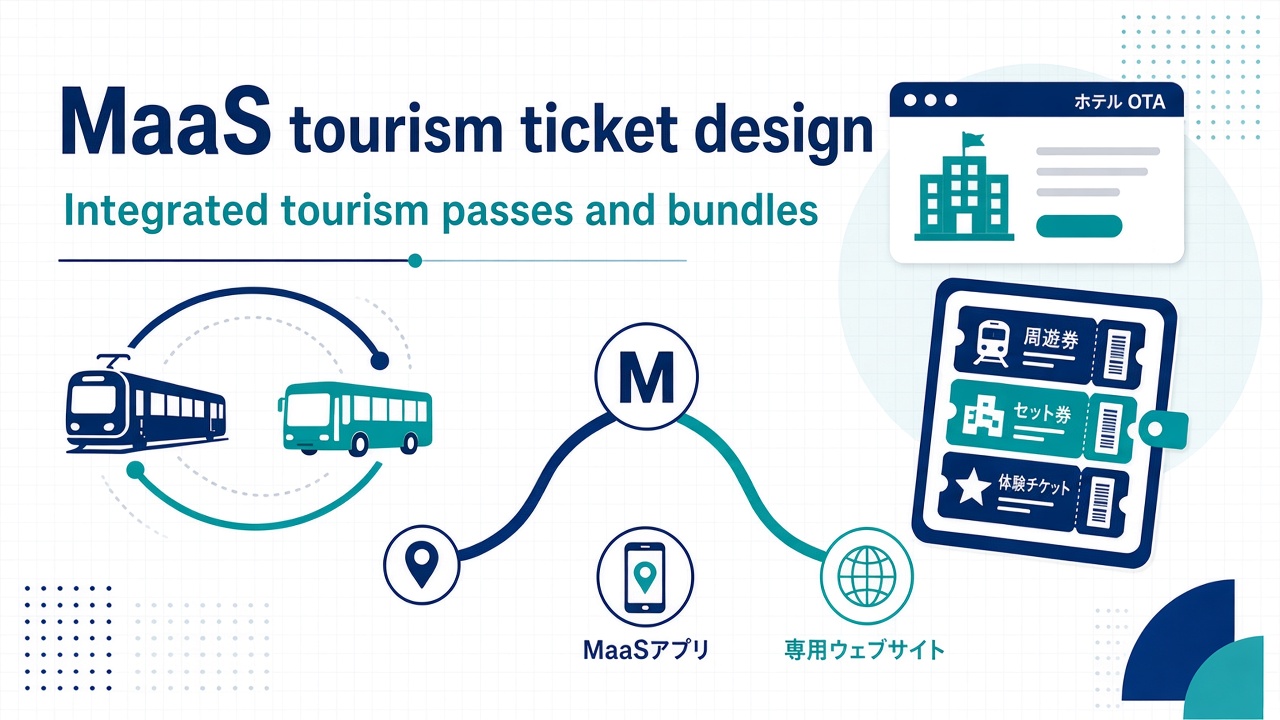
For MaaS tourism ticket design, align the visitor-facing “one journey” with who sells, validates use, and runs settlement on the back end. Visitor-facing MaaS sites are spreading, but DMOs still need a pre-quote map of where visitors buy and who settles. Start by mapping local requirements to the six categories below.
Table scrolls horizontally
| Category | Typical needs (MaaS × tourism) | Transit + venue + coupon bundle | Post-purchase list display | Fit / boundaries |
|---|---|---|---|---|
| 1 Electronic vouchers & gift certificates | Store-payment coupons, premium gift certificates | Often a layer separate from transit MaaS core | App balance, store terminals | Do not center only on gate/crew-validated bundle tickets |
| 2 Tourism ticket distribution | Multi-channel venue admission, QR check-in | Single-venue, fixed admission; tourism passes as separate SKUs | Per-venue check-in apps | Rail MaaS ride tickets plus wide-area settlement is a separate design |
| 3 Event ticket sales | Advance and day-of for one event or one venue | Advance and check-in per event | Per-event list | Wide-area MaaS purchase UI is covered in rows 4–6 |
| 4 Transit / MaaS ride tickets | Digital ride tickets, free passes, secondary transport links | Urban MaaS (buy transit + venues on the web at once) | MaaS web / app purchased screen | Operator participation, route registration, allocation depend on council design |
| 5 Regional OTA / booking platform | Lodging and experience booking web (tripla Book, etc.) | Guest-only coupons and bundled experiences fit; all-line transit integration often splits topics | Booking admin vs ticket UI often separate | Booking payment on OTA, tourism pass on another base — “needs review” below |
| 6 Program-dedicated site | Multiple products, eligibility, multi-operator settlement | Wide-area tourism (transit, bus, venues on one web) | Program URL + purchased list | Requirements where adding SKUs to existing MaaS alone will not match ticket rules |
The table lines up traits on equal footing. Whether the purchase UI sits on the transit / MaaS ride tickets row, the regional OTA / booking platform row, or the program-dedicated site row changes add-on cost for secondary transport, bundle tickets, and venue coupons.
Published rail and DMO MaaS includes urban web purchase of transit + venues, rail-QR-centered packaged tickets, and prefecture/DMO facility tourism passes—purchase UI location and validation differ by model. Below we cover where the purchase UI lives and how to split booking vs usage.
Secondary transport, bundle tickets, and MaaS touchpoints
Secondary transport and transit-plus-venue bundle tickets can sit on the transit / MaaS ride tickets row or the program-dedicated site row. The difference is where visitors buy and who defines per-operator settlement reports.
Table scrolls horizontally
| Topic | Load on existing MaaS purchase path | Integrated sale on program-branded web |
|---|---|---|
| Purchase entry | Add bus day passes and tourism products to MaaS web / app visitors already use | Bundle transit + venues on DMO or wide-area program web |
| Secondary transport | Route and operating-day master on operators; MaaS as sales and usage-log window | Sales desk on one site; bus operators join via allocation rules |
| Bundle tickets | Rail QR packages + bus often need rail base plus coordination | Extend eligibility, multilingual, and SKUs on same domain as program name |
Standalone bus splits IC-linked, QR ride tickets, and show-screen to crew—aligning route validation before MaaS connection shortens debate. When loading secondary transport on tourism products, write GTFS and operating-day master ownership and bus allocation first. Transit-plus-venue bundle tickets often split between bundling bus on rail infrastructure vs bundling transit and venues on program web.
tripla and existing MaaS | Scope that integrates easily
tripla Book and other regional OTAs are spreading as DMO-area lodging and experience booking webs. They load lodging booking, experience payment, and venue inventory on one site; “experiences bundled with stay” and “guest-only coupons” among tourism tickets often sit closest to the regional OTA / booking platform row.
Japan Tourism Agency DX materials point registered DMOs toward regional sites that can book and pay for lodging and experiences, with KPI targets toward end FY2027 in the agency’s Tourism DX study-group materials. Booking side often moves first; whether wide-area tourism passes, transit bundle tickets, and per-operator allocation can extend on regional OTA defaults alone depends on participant count and ticket rules.
Patterns that load easily on existing MaaS purchase paths include:
- Tourism MaaS with council and operator participation — sell transit + venue tickets on the web together; validation varies by route and venue (screen, gate QR, etc.)
- Digital ride and packaged tickets on wide-area MaaS — add tourism SKUs to web / app visitors already use
- Prefecture / DMO digital tourism passes — even without a MaaS council, bundle transit bundles later from program web
A typical fit for tripla and other regional OTAs is: after lodging booking, guide experiences and coupons; on site, entry via booking confirmation or QR. Whether rail-gate-integrated wide free passes, multi-bus allocation, or airport-only tourism passes fit one template needs a feature-list check at quote time.
Rebuilding ticket faces, validation, and refunds inside an existing tourism app often exceeds auth, payment, and store-link scope—quote tables also put dedicated ticket sites on equal footing.
Needs review | Splitting booking vs usage platforms
Some programs split lodging/experience booking (regional OTA / booking platform row) from post-purchase tourism lists and multi-operator settlement (closer to program-dedicated site). If two or more of the following apply, put separating booking platform and usage platform on equal footing in the quote table.
- Keep payment on existing OTA / lodging e-commerce and only grant digital tickets under program rules after purchase
- Show multiple products in one wallet (transit, venues, coupons, distribution tickets) on a URL separate from booking UI
- Per-operator settlement reports, cutoffs, and subsidy logs do not match OTA default settlement output
- Eligibility (guest-only, visitor attributes, airport distribution) differs between booking and ticket flows
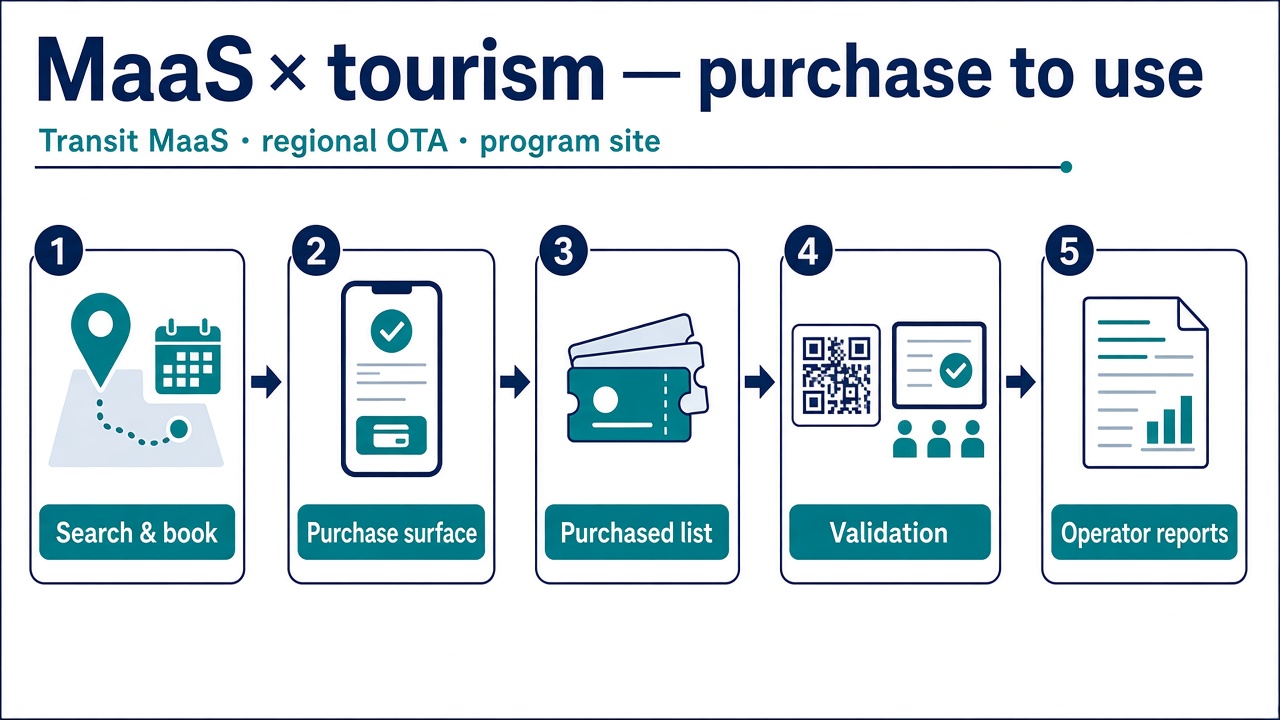
As a reference for split booking vs usage, the wide-area pass KiiPass on the Kii Peninsula uses one purchased screen for transit, bus, and venues from web purchase through multi-operator settlement—different from adding one SKU row to existing MaaS in sales desk, refunds, and ticket extension.
KiiPass wide-area tourism pass case study
Pay on lodging OTA then grant rights, usage, and settlement on another ticket base is not a standard template in every region. Options include PMS-linked guest tickets, regional OTA booking-ID links, and code distribution on program-dedicated sites—feasibility varies by base. Put models that split booking payment from post-purchase ticket faces and settlement on equal footing with regional-OTA-only completion in quote tables.
Decision checklist | Pre-quote topics
Before comparing vendors for MaaS tourism tickets, note the following to reduce row mix-ups on the table.
- 1. Visitor purchase UI — Which is primary: MaaS web, regional OTA, or program-dedicated web (roles if using several)
- 2. Product contents — Transit free pass, transit + venue bundle, venue tourism only, conditional distribution (urban MaaS, rail QR core, prefecture program, transit bundle add-on, etc.)
- 3. Secondary transport — Target routes, operating-day master location, bus allocation, GTFS readiness
- 4. Validation — Gate QR, crew/staff screen, venue gates (assume fleet-wide devices or not)
- 5. Settlement — Per-operator settlement reports, cutoffs, unused tickets and canceled service
- 6. Multilingual and refund desk — Who publishes sales and inquiry branding
When regional OTA and program-dedicated approaches mix, recheck “easy integration” and “booking vs usage split” from prior sections, narrow to two or three models, then request feature lists.
For quote requests, this sentence helps align replies: “Which is primary for the visitor purchase UI—transit / MaaS ride tickets, regional OTA, or program-dedicated web? Will transit bundle tickets, secondary transport, and venue coupons share one purchased screen? Who owns per-operator settlement report cutoffs and field definitions?” For single-event sales or allocation-only topics, name the event ticket sales row and settlement items in the quote memo.
Summary
- Fix purchase UI location on the six-category table
- Choose MaaS path vs program-dedicated for secondary transport and bundle tickets; write bus and rail connection requirements
- Compare easy-integration scope for tripla and existing MaaS with needs review split of booking and usage on equal footing
- Cross-check integrated-design examples and proceed to quotes with the decision checklist
See features and rollout examples on the service site.
FAQ
Q1. Can we start MaaS tourism tickets from an existing regional MaaS?
Where councils and web sales bases exist, adding transit + venue tickets is a strong option. Prefecture programs starting with venue tourism only vs rail-QR packaged tickets differ in validation and refund desks. Compare purchase UI and settlement desks on equal footing on the transit / MaaS ride tickets and program-dedicated site rows.
Q2. Can tripla integrate a transit free pass end to end?
tripla Book excels as a regional OTA booking web for lodging and experiences. Whether rail-gate integration, multi-bus allocation, and airport-only tourism passes fit one template depends on products and participants—check the feature list. Put transit-heavy topics on the transit / MaaS ride tickets row and wide integration on the program-dedicated site row on equal footing.
Q3. Tourism MaaS vs wide-area program web?
The former buys transit + venues on MaaS purchase paths. The latter is DMO or wide-area program web with purchased lists and multi-operator settlement designed together. Split booking vs usage needs review patterns align more with the latter. KiiPass (Kii Peninsula wide pass) is a wide integrated example: one purchased screen for transit, bus, and venues from web purchase.
Q4. Can we add secondary transport to MaaS later?
Yes, but align route and operating-day masters and ticket source of truth before tourism productization. For community buses, organize GTFS and operating units first.
Q5. Auto-grant a limited tourism pass to OTA lodging guests?
Multiple patterns exist; not every region shares the same template. Examples: PMS-linked guest tickets, regional OTA booking-ID links, code distribution on program-dedicated sites. Post-purchase linkage depends on the base chosen. If unsupported, start from program-dedicated design and put split booking payment vs post-purchase ticket faces and settlement on equal footing in quote tables.
Related service
SmartPlate Ticket
For needs review patterns that split booking and usage, or MaaS tourism tickets on the program-dedicated site row, one option is integrated operation from web purchase on a program-dedicated ticket site via SmartPlate Ticket. See post-purchase lists, eligibility, and multi-operator settlement on the SmartPlate Ticket service site and service materials (free). Post-lodging-OTA entitlement linkage is available by requirements and integration method; it is not a standard feature in every region. Role split with existing regional OTAs and MaaS is easier to organize in quote memos as needs review patterns that split booking payment from post-purchase ticket faces and settlement.